Backup power keeps selected pool functions alive.
Pumps, controls, lighting, and selected support loads can be reviewed for backup design. The key is not drama. The key is priority.
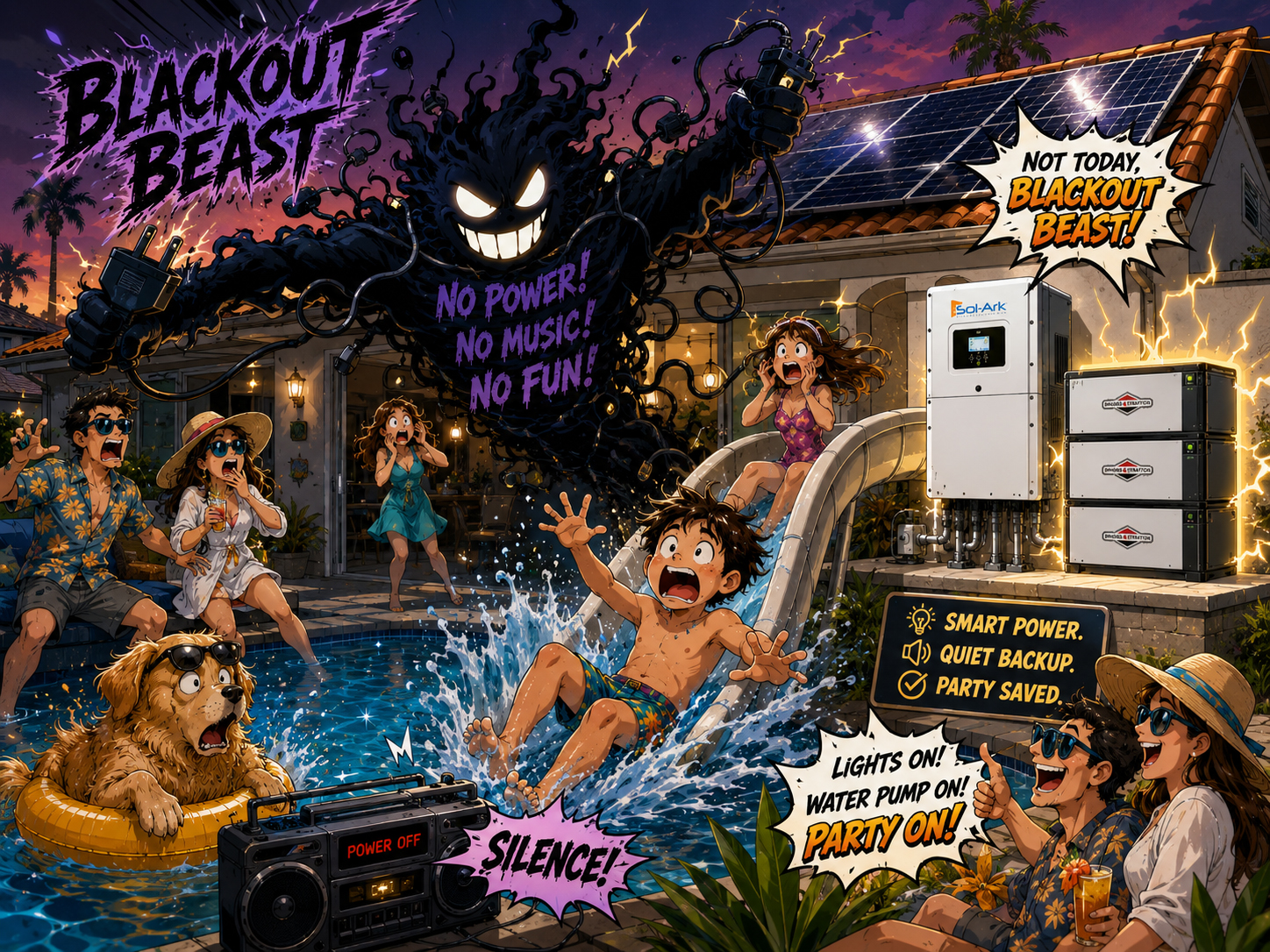
Battery backup for pool fun is about choosing the right loads, protecting the right equipment, and keeping the backyard from going silent when the grid decides to take a swim break.
The backup truth
A smart pool backup plan starts by deciding which loads are important, which loads are practical, and which loads should wait for normal grid power. That is the difference between useful backup and wishful thinking.
Pumps, controls, lighting, and selected support loads can be reviewed for backup design. The key is not drama. The key is priority.
Heating, spa systems, and large water features may have heavy electrical demand. A good design does not pretend. It measures, reviews, and prioritizes.
Critical pool loads
Every home is different, but the backup conversation usually starts with the pool equipment that protects water movement, control, visibility, and practical operation.
Circulation may be the first pool load to discuss for backup support.
Automation, timers, and control systems can matter when equipment must behave.
Pool and patio lights can preserve evening safety and usability.
Some features are fun, some are essential, and some should not be backed up.
The family reason continued
They do not ask whether the pump is a selected critical load. They ask whether the slide, lights, water, and fun still work.
The comedy villain
He wants the lights out, the water silent, and the party over. Sol-Ark and Briggs & Stratton battery backup turn the scene from panic into planning.
The equipment answer
The pool equipment pad is where the real questions live: pumps, filters, controls, conduits, breakers, inverters, batteries, and practical space.
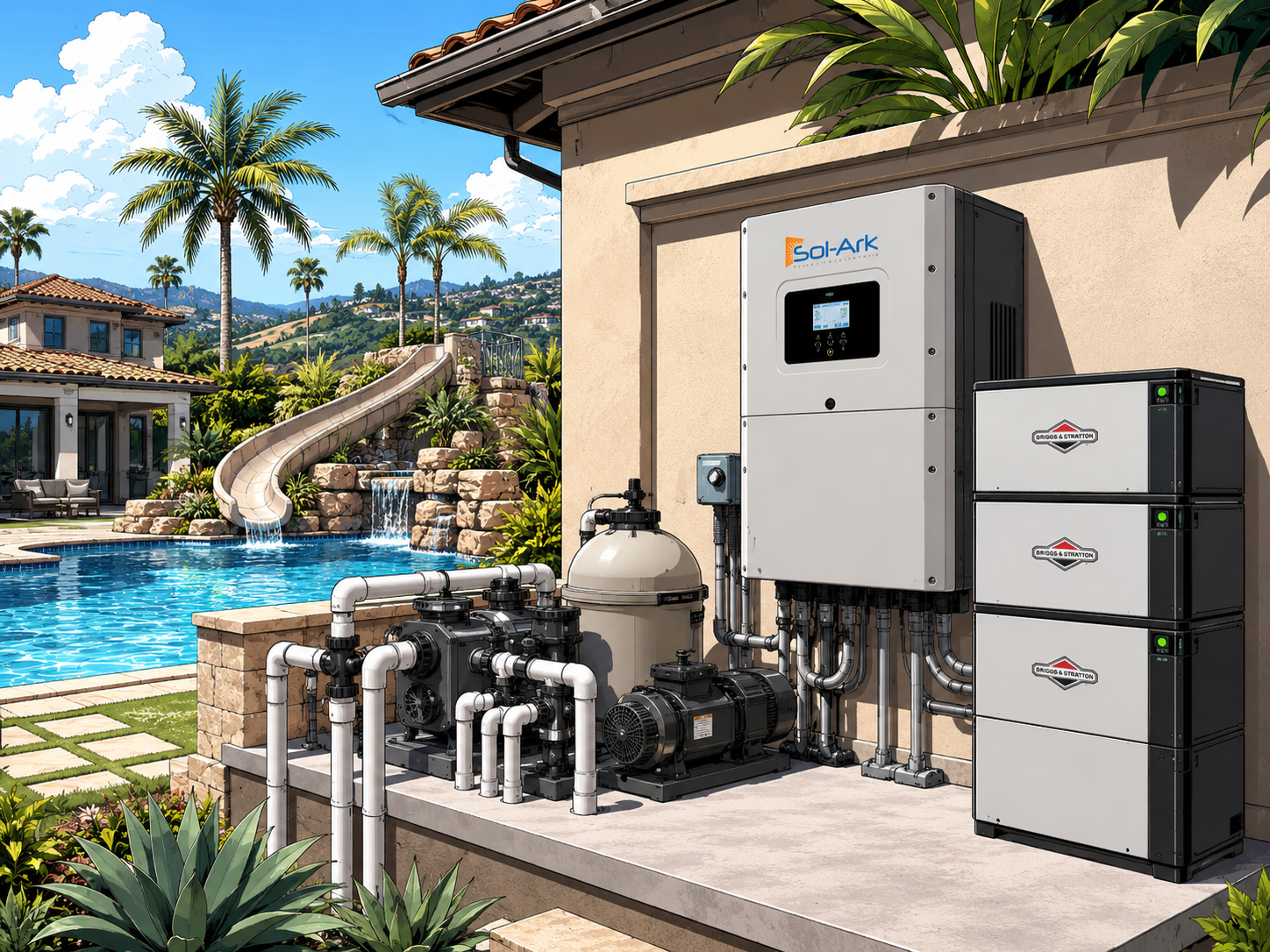
“Back up the pool” is too vague. “Back up selected pool pump, controls, and lighting loads” is the beginning of a real design conversation.
ABC Solar design questions
Good backup planning is not a slogan. It is a list of actual circuits, equipment ratings, owner priorities, available space, budget, solar production, and battery capacity.
| Backup question | Why it matters | Practical direction |
|---|---|---|
| Which pool loads are essential? | Backup capacity should be reserved for priority functions. | Start with pump, controls, and safety lighting where appropriate. |
| What are the actual load sizes? | Guessing can create disappointment or overspending. | Review equipment labels, circuits, and operating behavior. |
| How long should backup last? | Runtime expectations drive battery sizing. | Separate short outage resilience from long-duration independence. |
| Should heating be backed up? | Heating can be much larger than lights or controls. | Review carefully before including comfort loads. |
| Where will equipment be placed? | Install quality depends on space, access, conduit, and code. | Inspect the equipment pad and electrical path early. |