Storage is useful when the job is clear.
Batteries should be sized around real priorities: pump, controls, lighting, communications, refrigeration, or other selected loads depending on the homeowner’s goals.

Solar battery backup is the resilience side of the SolarPoolSlide.com story: use solar, Sol-Ark, Briggs & Stratton batteries, and selected-load design to protect the parts of the pool that matter.
The backup idea
The practical question is simple: which pool and home loads should stay on during an outage, and how long should they run? That answer drives the design.
Batteries should be sized around real priorities: pump, controls, lighting, communications, refrigeration, or other selected loads depending on the homeowner’s goals.
Pool heaters, spas, and large water features may be significant loads. They should be reviewed carefully before being included in backup expectations.
The backup chain
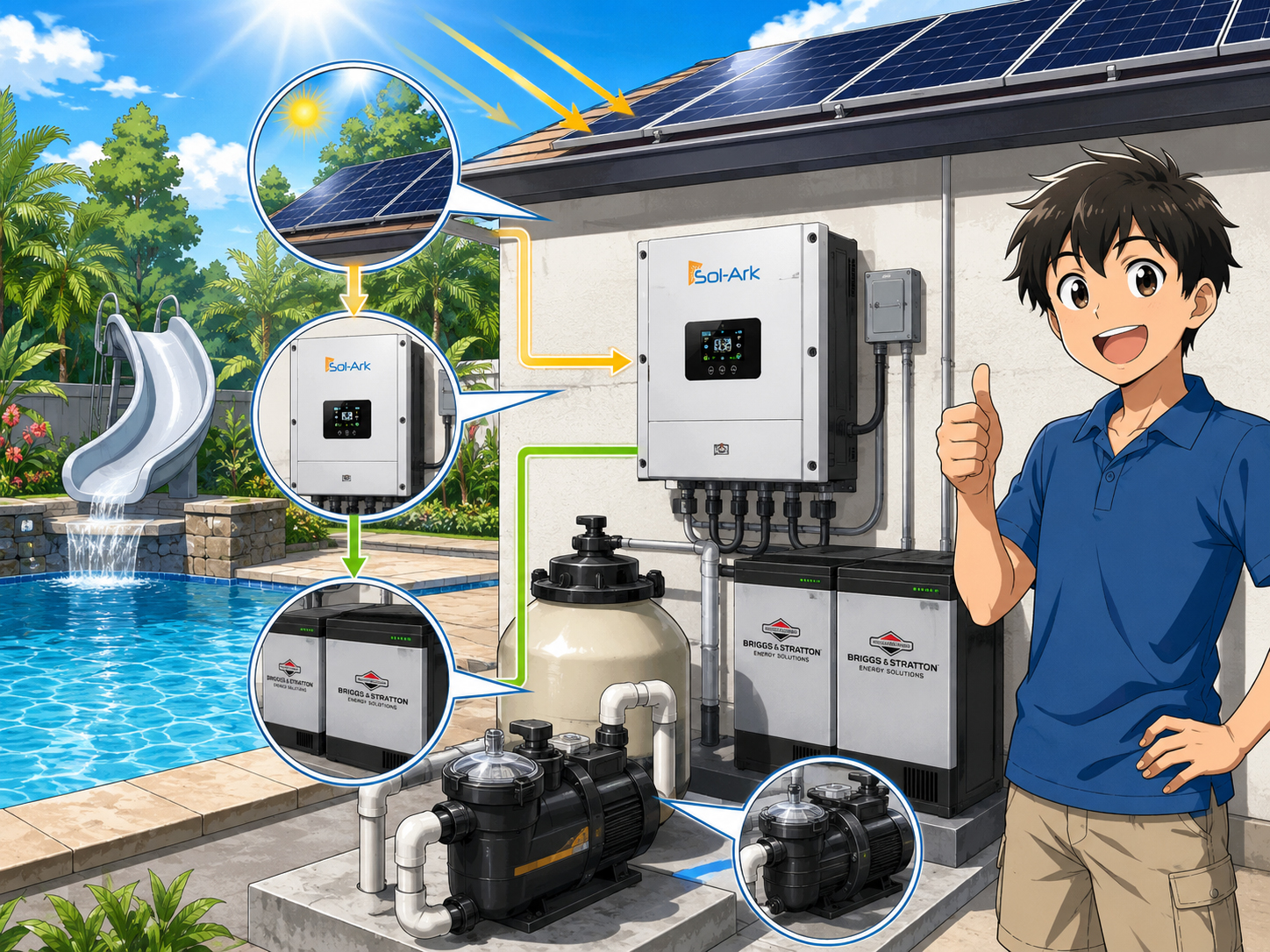
A clear system links solar production, inverter control, battery storage, selected circuits, and real pool equipment.
Solar production helps support the home and battery strategy during sunny conditions.
The inverter coordinates solar, battery, grid, and selected-load operation.
Stored energy can support priority loads when capacity and runtime are matched.
Pool pump, controls, lights, and other circuits must be chosen intentionally.
The visible result is a backyard that does not immediately surrender to an outage.
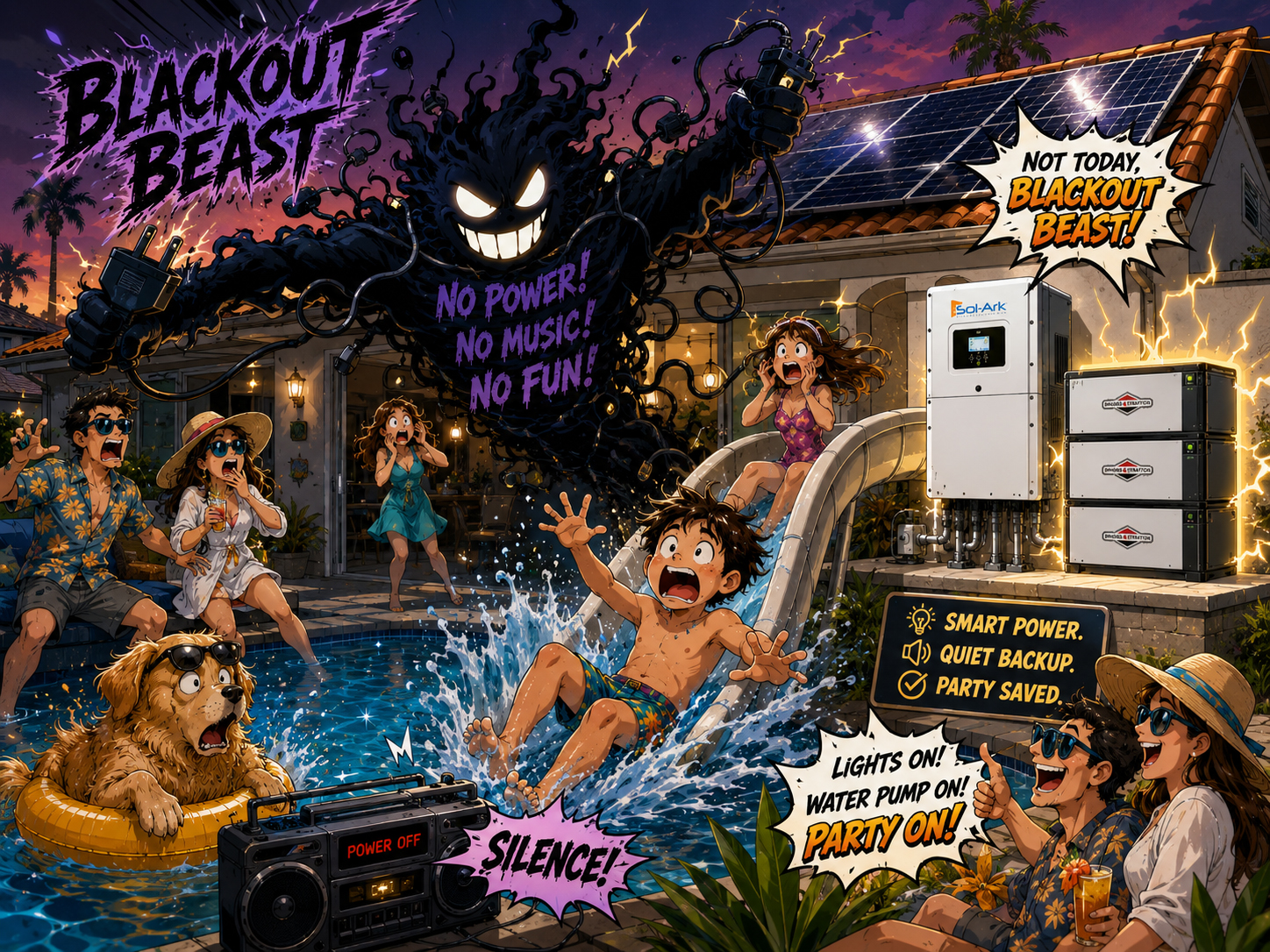
The villain test
When the grid fails, vague promises disappear. Selected-load backup gives the system a clear job: keep the chosen essentials alive for the expected runtime.
Backup priorities
Every site is different, but these are common categories to discuss before sizing anything.
The pump may be the most important pool-related load, but size and runtime must be reviewed.
Timers, automation, and control circuits can be small but important during outages.
Lighting can preserve safety, visibility, and the feeling that the backyard is still usable.
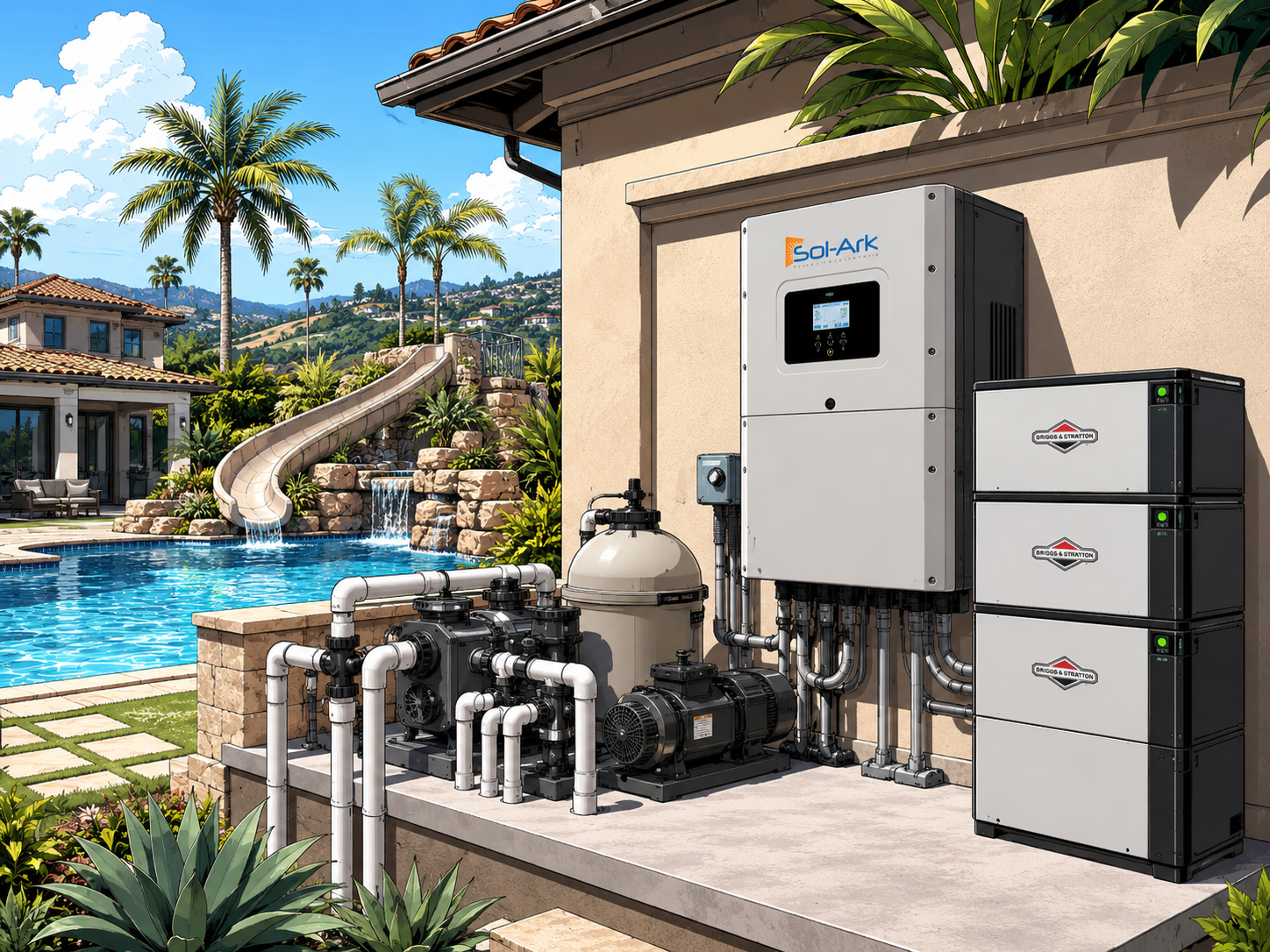
The equipment-pad answer
Before deciding what can be backed up, ABC Solar needs to know the actual circuits, pump ratings, controls, lights, inverter location, battery location, conduit path, and available service access.

The family reason
That is why the backup story has to be simple. The family wants the backyard to keep its promise. The design has to decide which parts of that promise can be protected.
“Run everything” is not a design. “Keep these selected loads operating for this expected runtime” is where real design begins.
Backup design table
The battery backup conversation should be specific before equipment is selected or promises are made.
| Decision | Why it matters | Practical direction |
|---|---|---|
| Selected loads | Backup capacity is finite. | Choose pump, controls, lighting, or other priorities intentionally. |
| Expected runtime | Runtime drives battery sizing and expectations. | Separate short outage support from long-duration resilience. |
| Solar recharge | Solar availability affects recovery and resilience. | Review roof space, sun exposure, and real system output potential. |
| Heavy loads | Heating and spa loads can consume storage quickly. | Treat them as special cases, not casual backup assumptions. |
| Equipment location | Clean installs need access, clearance, and conduit planning. | Inspect equipment pad and electrical route early. |
Related pages
The outage villain explains why selected loads matter.
The hidden load that often starts the backup conversation.
The visible proof that selected backup can protect the mood.