Briggs & Stratton stores useful energy.
In the SolarPoolSlide.com world, Briggs & Stratton battery equipment is the backup muscle that supports selected loads when paired with a thoughtful inverter and circuit design.
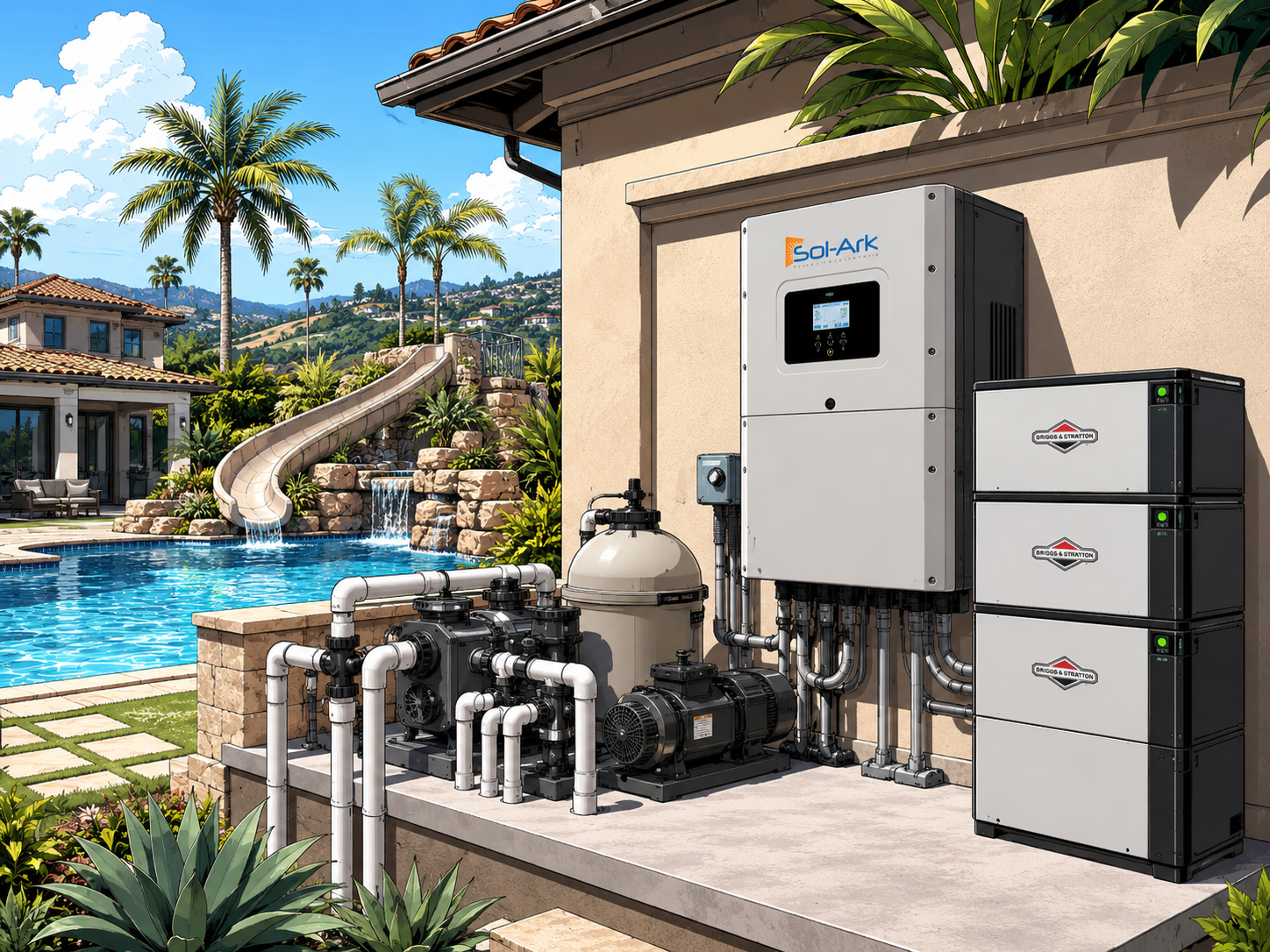
Briggs & Stratton pool backup is the practical storage side of the SolarPoolSlide.com story: batteries can support selected pool loads, but the design must start with what matters most.
The battery role
Pool owners may want everything to keep running. A serious battery design asks a sharper question: which loads matter most when the grid goes down?
In the SolarPoolSlide.com world, Briggs & Stratton battery equipment is the backup muscle that supports selected loads when paired with a thoughtful inverter and circuit design.
Pumps, controls, lights, heaters, spa loads, and water features vary by home. Battery planning must follow the actual equipment, not a cartoon assumption.
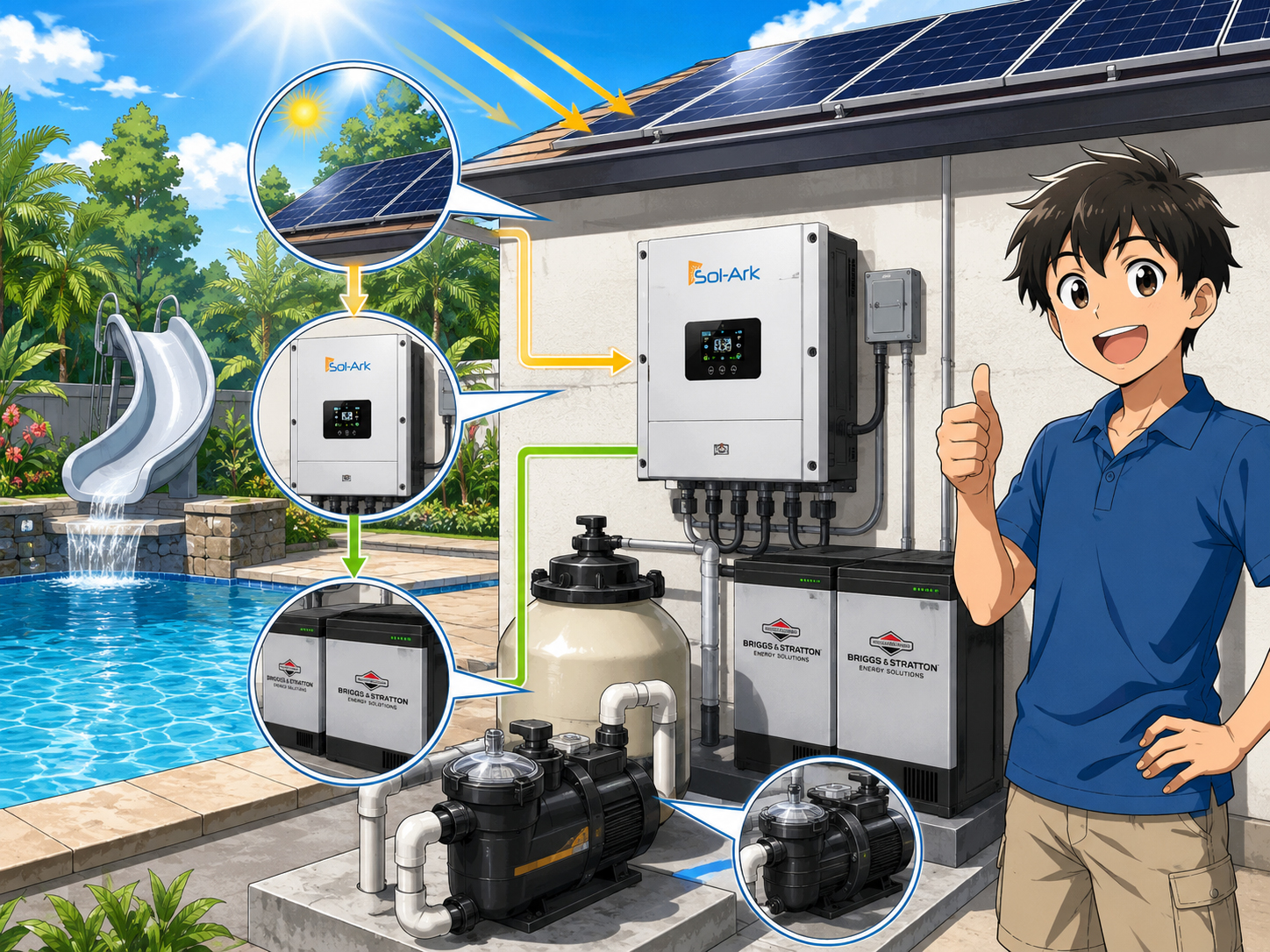
The backup chain
The battery is powerful only when the design is clear.
Rooftop solar supports the home and pool energy story during sunny hours.
The inverter coordinates solar, battery storage, grid connection, and backup behavior.
Stored energy becomes useful when the selected backup loads are realistic.
Pool pump, controls, and lights may be considered depending on goals and load size.
The visible result is a backyard that does not immediately surrender to the Blackout Beast.
The equipment-pad truth
Battery backup works best when the selected loads are clear: pump, controls, lighting, or other essentials. Heating and large feature loads need honest review before becoming part of the promise.
Backup priorities
The answer depends on the real equipment and the homeowner’s goals. The safest starting point is selected loads, not “everything in the backyard.”
Circulation may be a priority, but the actual pump size, voltage, and runtime matter.
Lighting, automation, timers, and control circuits may be practical and useful backup candidates.
Pool heating and spa comfort can be large loads. Treat them with respect, not sales poetry.
Blackout Beast defense
The Blackout Beast wins when nobody decided what should stay on. Briggs & Stratton battery backup, paired with proper inverter and load planning, gives the system a fighting chance.
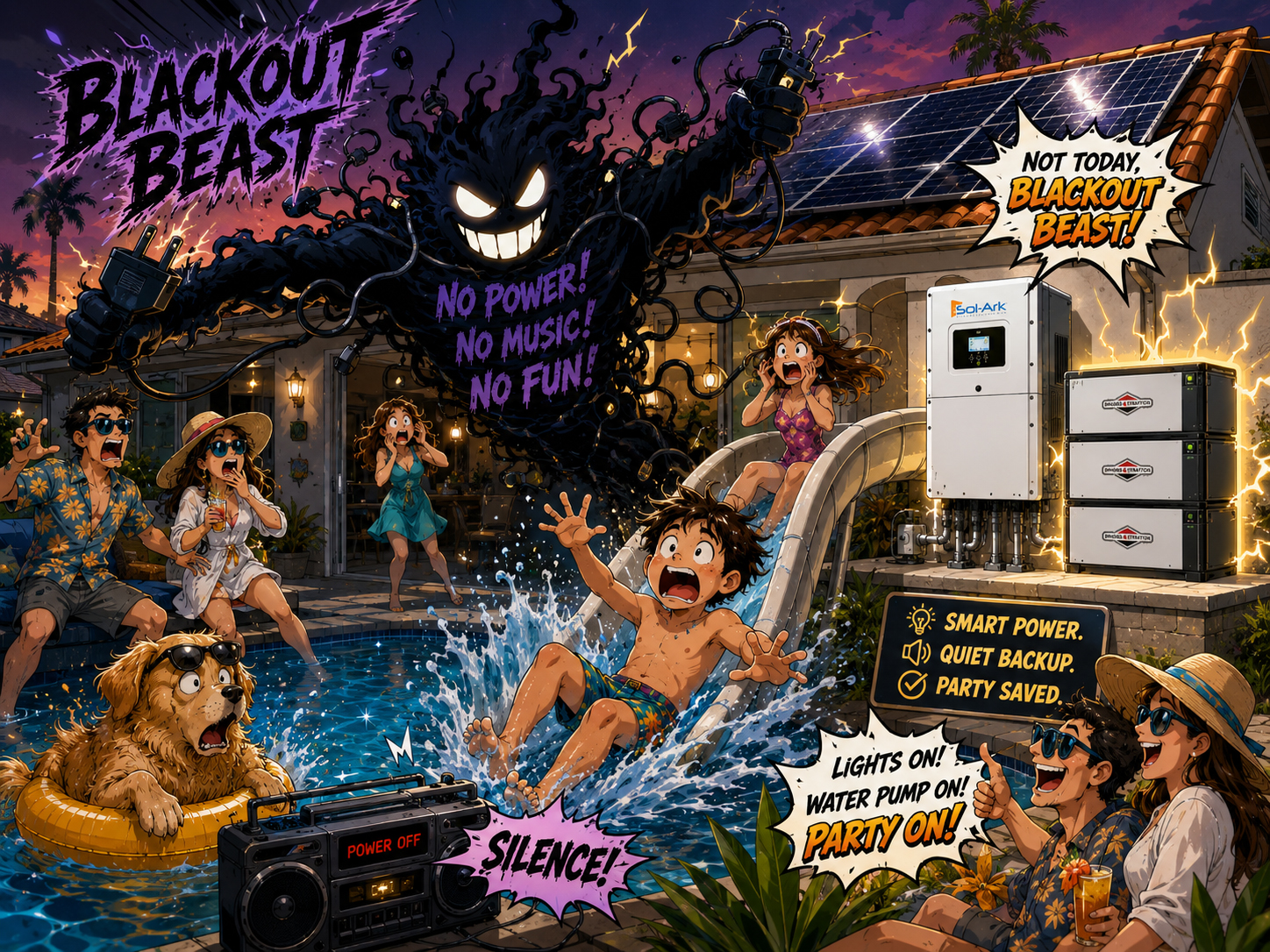
“Keep selected pool loads alive” is a design conversation. “Run the entire backyard forever” is a cartoon villain waiting to happen.
ABC Solar review table
A real battery backup design depends on the equipment, load size, desired runtime, solar production, inverter behavior, installation conditions, and owner priorities.
| Review item | Why it matters | Design question |
|---|---|---|
| Selected pool loads | Backup should support priorities. | Which pump, control, lighting, or support loads should stay on? |
| Battery runtime | Storage capacity is finite. | How long should those selected loads operate? |
| Heating and spa loads | Comfort loads can be much larger than control loads. | Are they truly backup priorities or normal-grid luxuries? |
| Sol-Ark integration | Inverter strategy affects backup behavior. | How will solar, battery, grid, and loads be coordinated? |
| Equipment pad space | Install quality depends on real-world conditions. | Where can the batteries, inverter, conduit, and disconnects be placed? |
Related SolarPoolSlide stories
The slide is the show. The pump is the electrical story.

Lights make backup visible when the rest of the neighborhood goes dark.
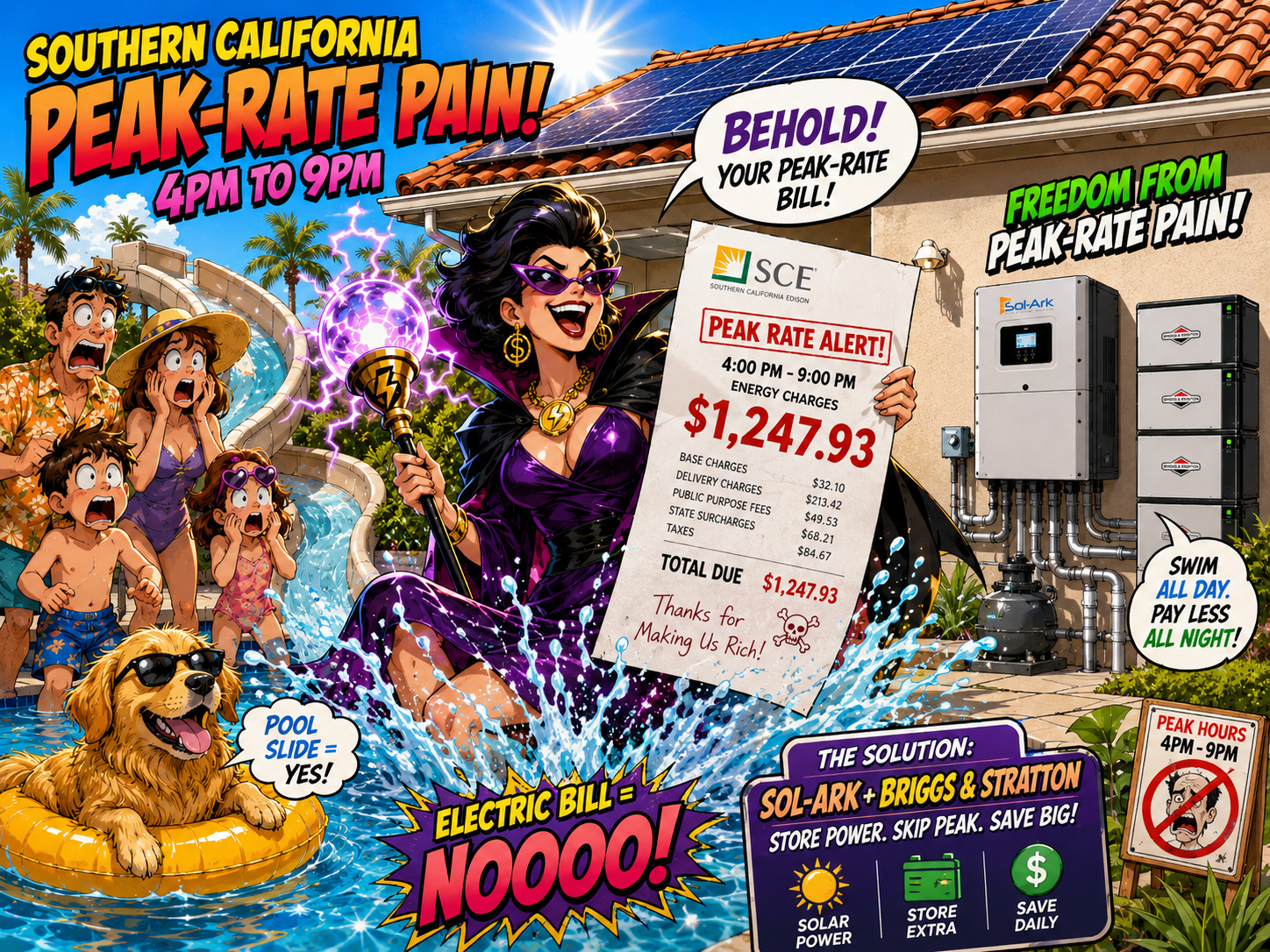
Rates make the savings story memorable before the bill lands in the pool.