The pool equipment is the working system.
The pump, filter, valves, controllers, and water-feature equipment decide how the pool actually behaves. The slide may be the star, but the pad is the engine room.
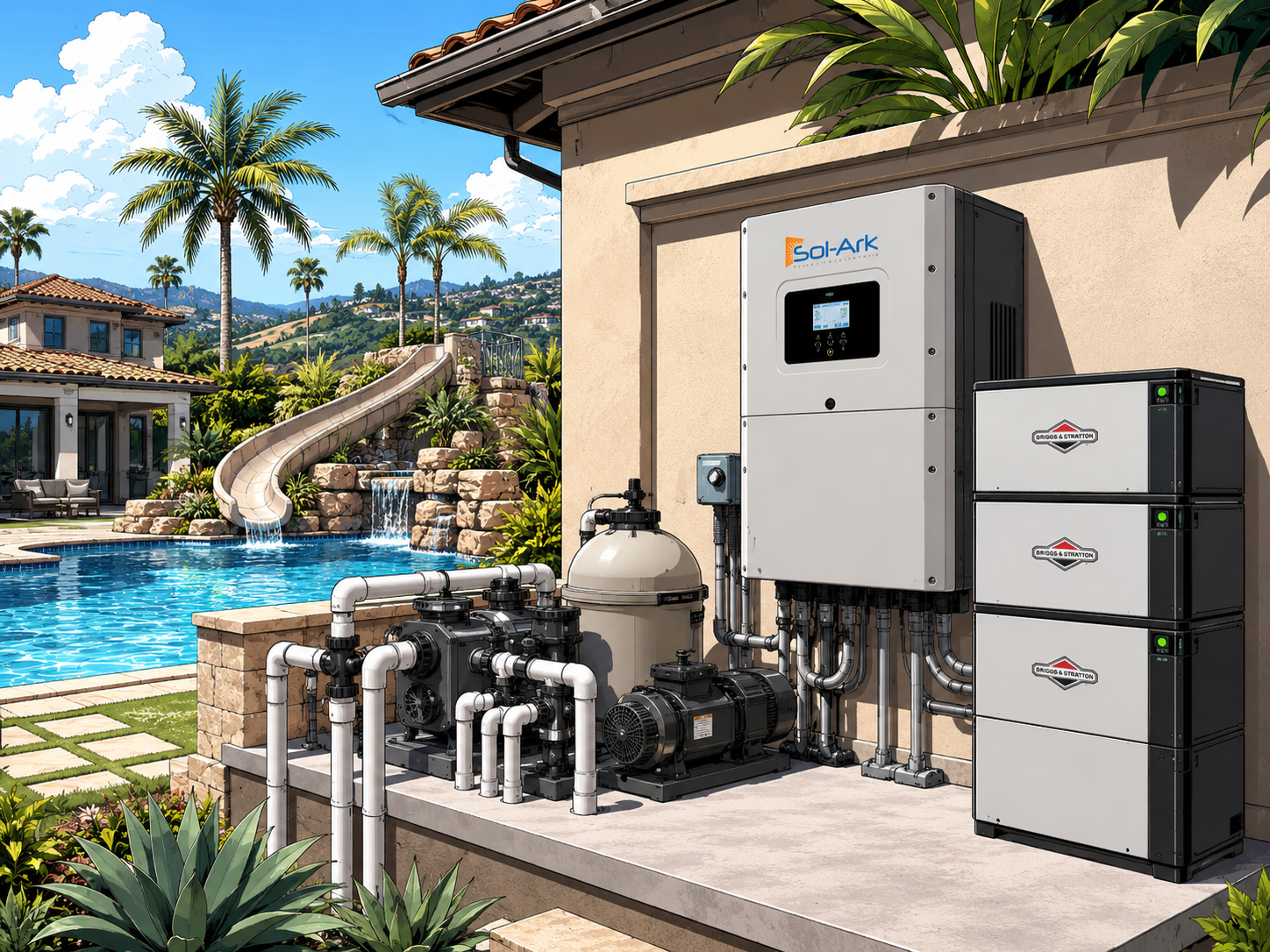
Pumps, filters, controls, conduits, breakers, Sol-Ark, Briggs & Stratton batteries, and backup-load decisions all meet here. This is where SolarPoolSlide.com becomes real engineering.
The serious backyard corner
The pool looks simple from the chaise lounge. The equipment pad shows the truth: water movement, filtration, controls, electrical routing, battery backup, inverter strategy, and service access.
The pump, filter, valves, controllers, and water-feature equipment decide how the pool actually behaves. The slide may be the star, but the pad is the engine room.
Sol-Ark and Briggs & Stratton battery equipment must be planned with space, access, clearance, conduit routes, circuit priorities, and code-compliant installation in mind.
The equipment-pad chain
The pool slide may be the emotional story, but the pad is the practical system map.
The pump, filter, valves, and plumbing keep the pool alive and useful.
Timers, automation, and circuits determine when equipment runs and how it behaves.
Rooftop solar production can help offset home and pool energy use.
Selected backup loads can stay alive when the design is specific and realistic.
The visible result is water, lights, comfort, and pool-slide fun that feels reliable.
The hero image explained
The pool equipment pad decides whether the pool is just pretty or actually dependable. It is also where backup power planning becomes specific instead of poetic.
What lives at the pad
A clean review should identify the components, the circuits, the runtime, the backup priorities, and the physical installation limits before any system is promised.
Pumps, filters, valves, chlorination equipment, automation, and water-feature controls define the pool load story.
Sol-Ark, disconnects, conduits, breakers, and electrical routing must be designed around real site conditions.
Briggs & Stratton battery storage should support selected loads with realistic runtime expectations.
Why ABC Solar starts here
Backup planning is not a slogan. It depends on load size, circuit separation, inverter capacity, battery storage, conduit paths, service access, and what the homeowner actually wants protected.
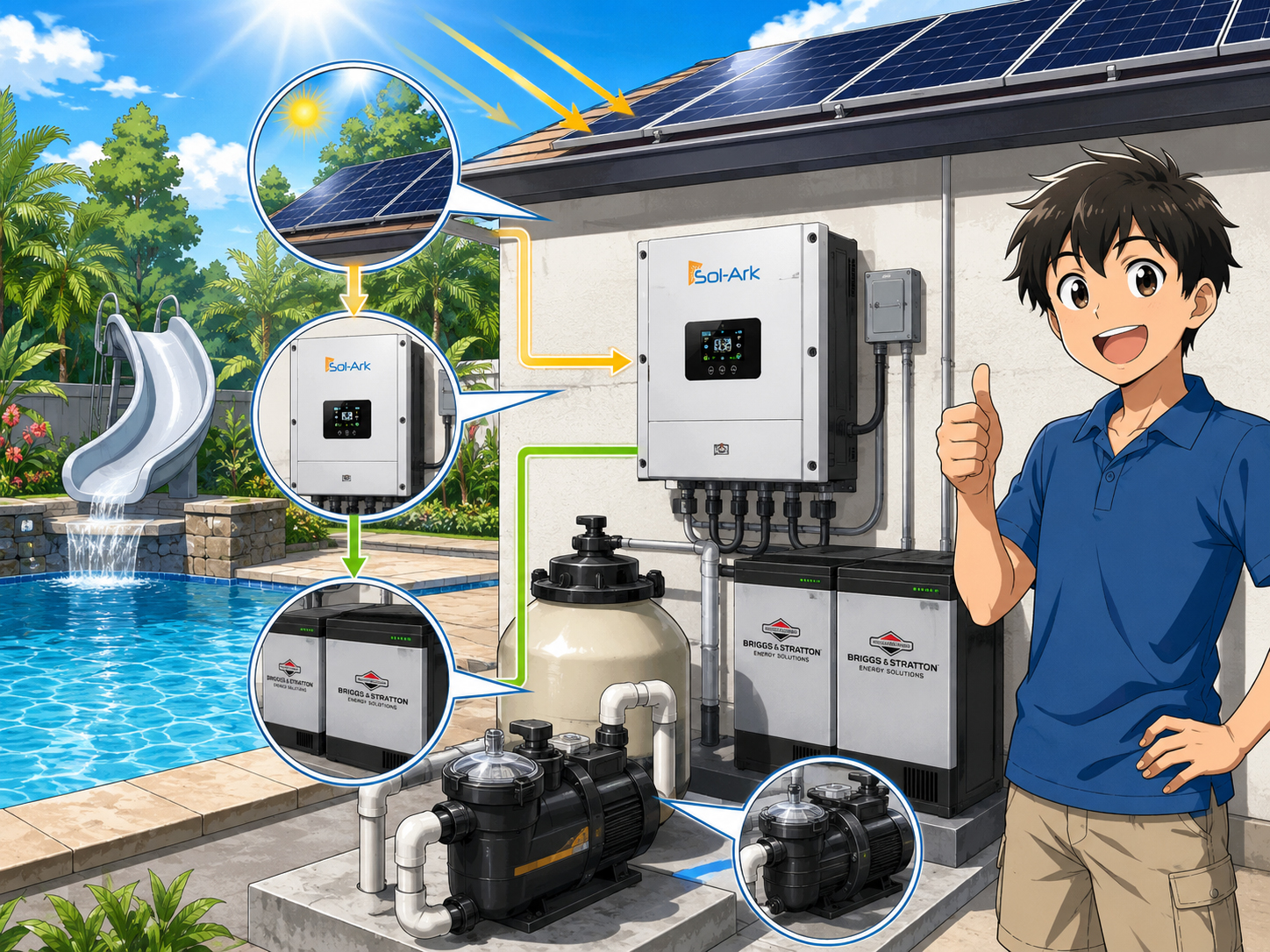
Treat the equipment pad like the command center, and the whole pool-power story becomes clearer.
Equipment-pad review table
The first step is not guessing battery size. The first step is understanding the actual system.
| Review item | What to look for | Why it matters |
|---|---|---|
| Pool pump | Voltage, amperage, horsepower, runtime, and controls | The pump may be the most important pool-related load. |
| Pool lights | Lighting circuits, controls, transformers, and location | Lights affect safety, night use, and backup priorities. |
| Automation | Timers, controllers, valves, and low-voltage systems | Controls may be small but important during outages. |
| Heater / spa | Equipment type, fuel source, electrical draw, and expectations | Comfort loads can be large and should be treated honestly. |
| Solar and battery equipment | Available wall space, clearance, conduit route, and access | Clean installation planning starts with physical reality. |
The equipment pad fights every villain

She hates schedules, solar awareness, and clear load planning.
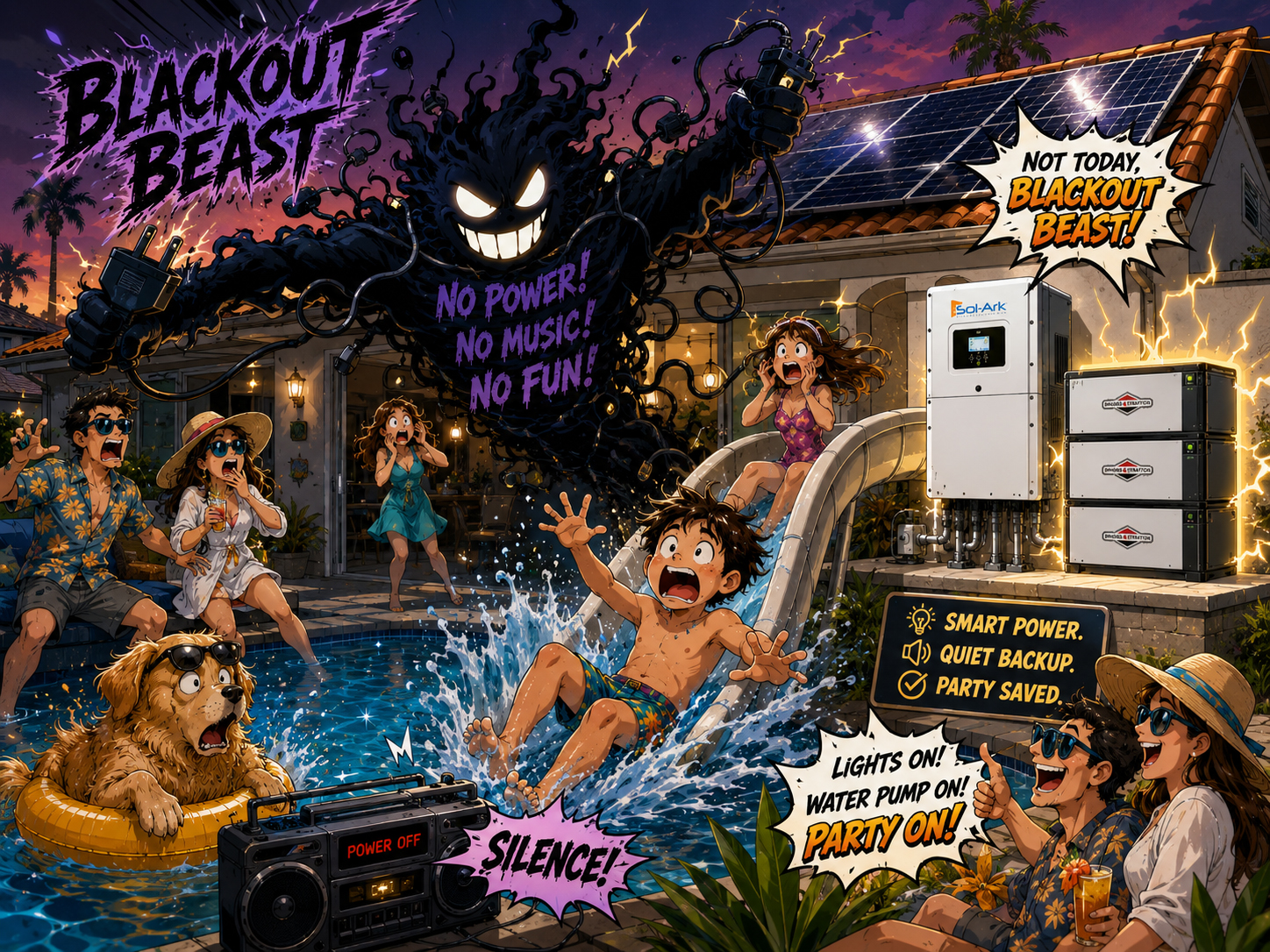
He gets weaker when selected backup circuits are ready.

He proves that pool care needs working systems, not just chemicals and hope.