Solar production helps feed the story.
Rooftop solar can help offset home and pool electrical use. The better the load review, the better the solar conversation becomes.
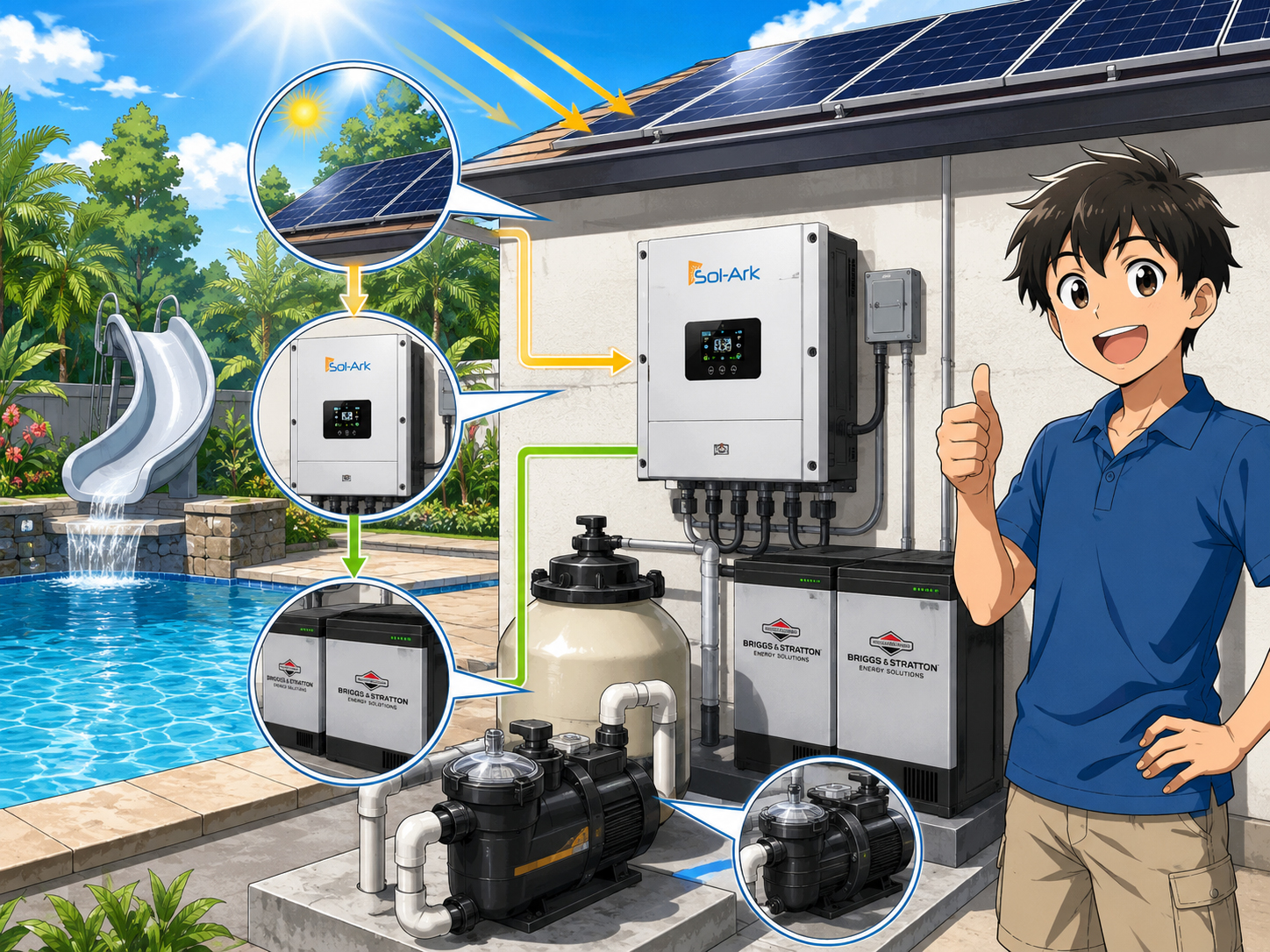
SolarPoolSlide.com explains the backyard energy chain: solar panels, Sol-Ark inverter, Briggs & Stratton battery backup, selected pool loads, pump runtime, lights, controls, and the family pool fun at the end.
The simple version
A pool-slide solar story is not just panels on a roof. The real answer combines production, inverter control, battery storage, selected loads, operating schedules, and practical installation details.
Rooftop solar can help offset home and pool electrical use. The better the load review, the better the solar conversation becomes.
Pumps, filters, lights, controls, heating, spa equipment, and water features all need to be understood before anyone promises backup or savings.
The full chain
This is the practical SolarPoolSlide.com system map.
Panels produce electricity during sunny hours and support the broader home energy plan.
The inverter coordinates solar, batteries, grid power, and the selected-load strategy.
Battery storage supports backup goals when capacity and loads are matched correctly.
Pool pump, controls, lights, and other circuits must be selected intentionally.
The pump, filter, controls, and water-feature equipment keep the pool alive.
The visible outcome is water movement, lights, comfort, and pool-slide joy.
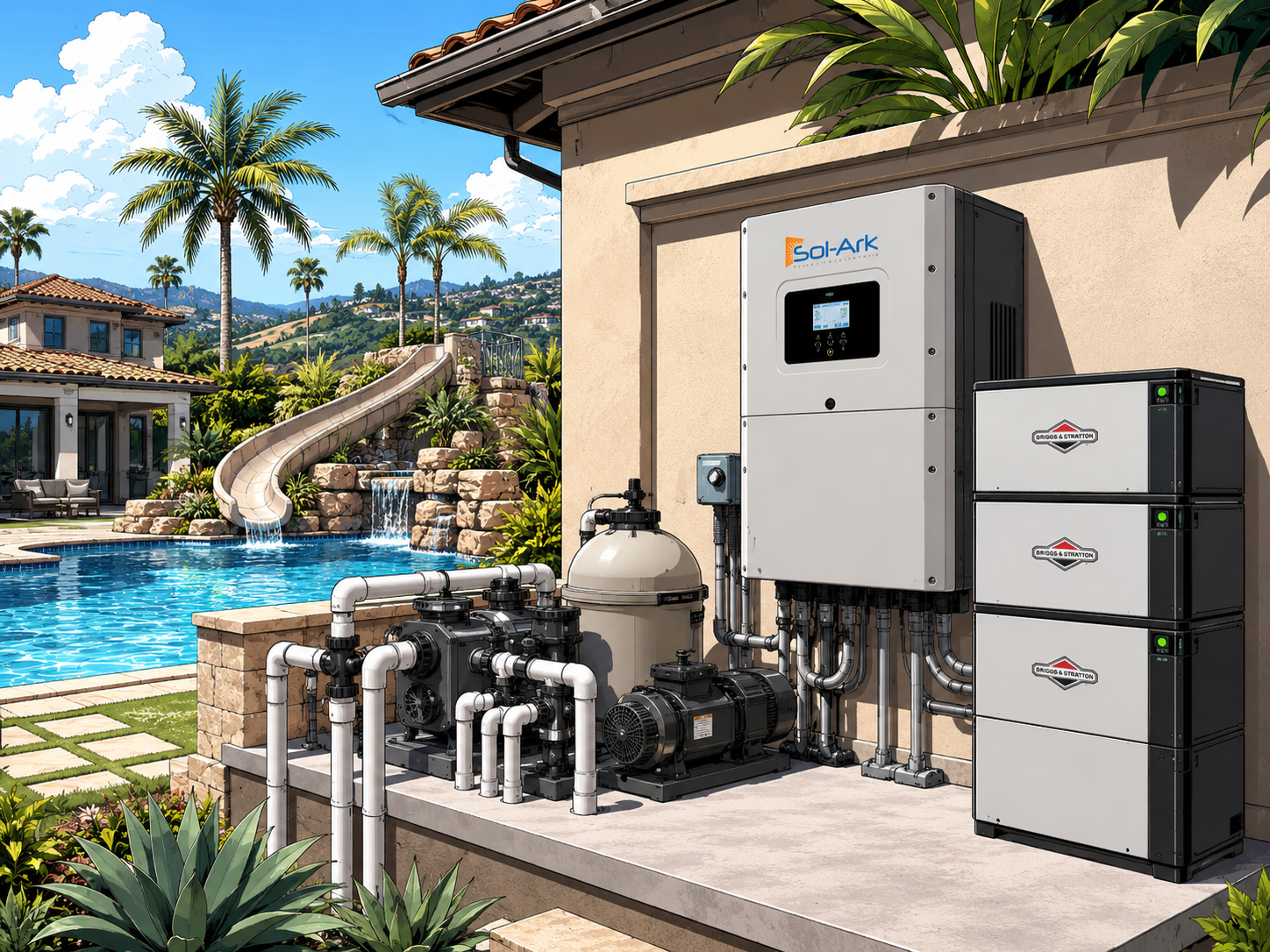
The command center
This is where the cartoon becomes a system: pump circuits, controls, inverter placement, battery storage, conduit routing, service access, and realistic backup priorities.
The three design decisions
The system works best when the owner knows what is being powered, why it matters, and what should happen during peak rates or outages.
Pool pump, lights, controls, water features, heating, spa equipment, and home loads need to be listed clearly.
Backup should focus on selected circuits that matter, not every possible backyard luxury.
Solar production, Sol-Ark inverter strategy, Briggs battery capacity, and runtime expectations should align.

What the system can help with
SolarPoolSlide.com translates technical design into homeowner language: lower surprise, better resilience, smarter equipment planning, and more confidence in the backyard.
SolarPoolSlide.com keeps it funny, but the design question is serious: what should run, when should it run, and what should stay on when the grid fails?
How-it-works table
These are the main pieces ABC Solar would review before designing a pool-related solar and battery backup plan.
| System part | What it does | Design question |
|---|---|---|
| Solar panels | Produce electricity during sunny hours. | How much roof area and sun exposure are available? |
| Sol-Ark inverter | Coordinates solar, battery, grid, and load behavior. | How should the selected loads be configured? |
| Briggs & Stratton battery | Stores energy for backup and resilience goals. | What runtime is expected for the selected loads? |
| Pool pump and controls | Move water and manage pool operation. | Which pool circuits matter during outages? |
| Lighting and comfort loads | Support evening use, safety, and luxury. | Which loads are practical backup candidates? |
| Equipment pad | Provides the physical installation and service area. | Is there clean space, clearance, conduit access, and serviceability? |
Follow the story
The inverter-centered power management story.
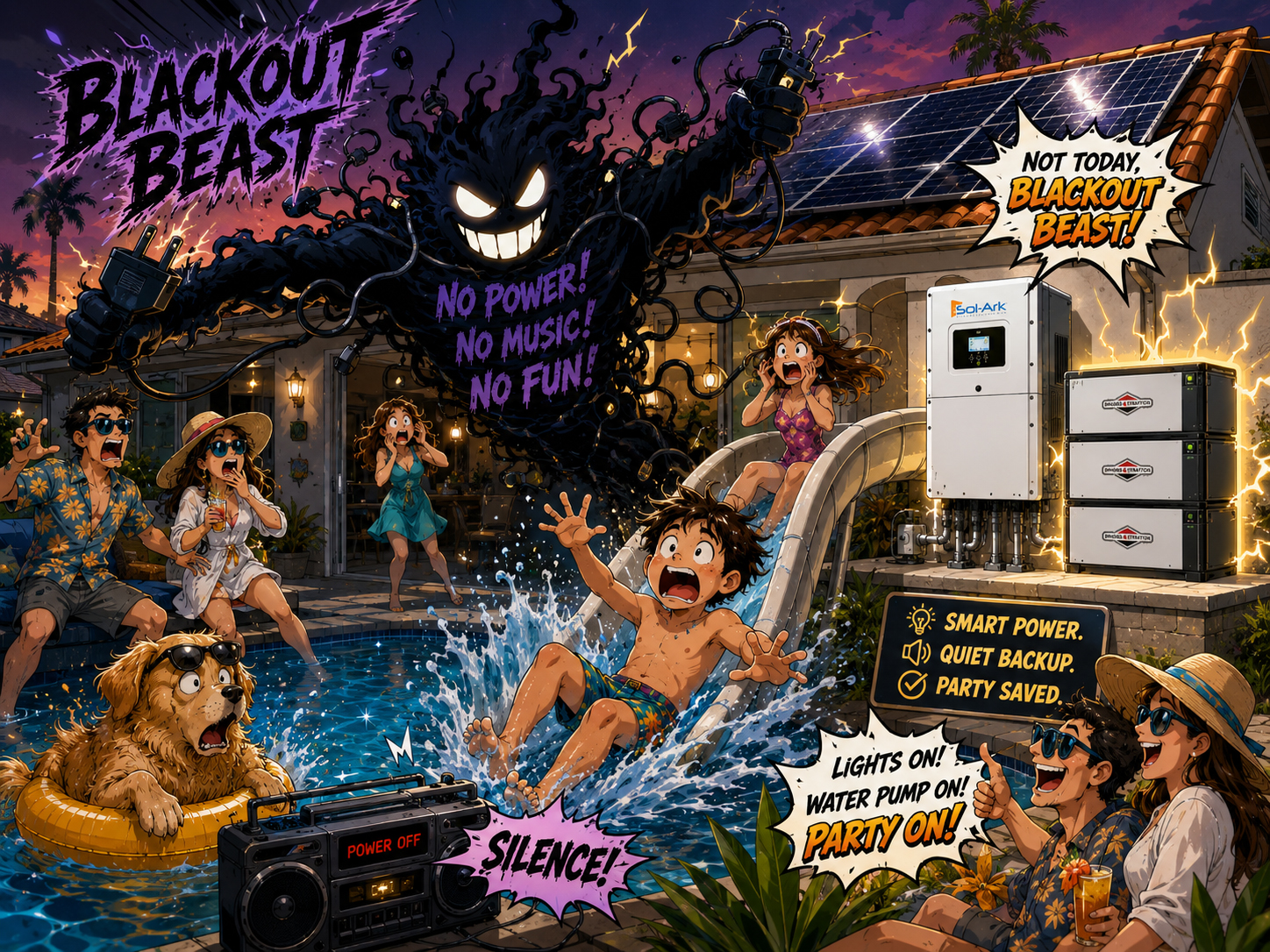
The stored-power chapter of the backyard story.
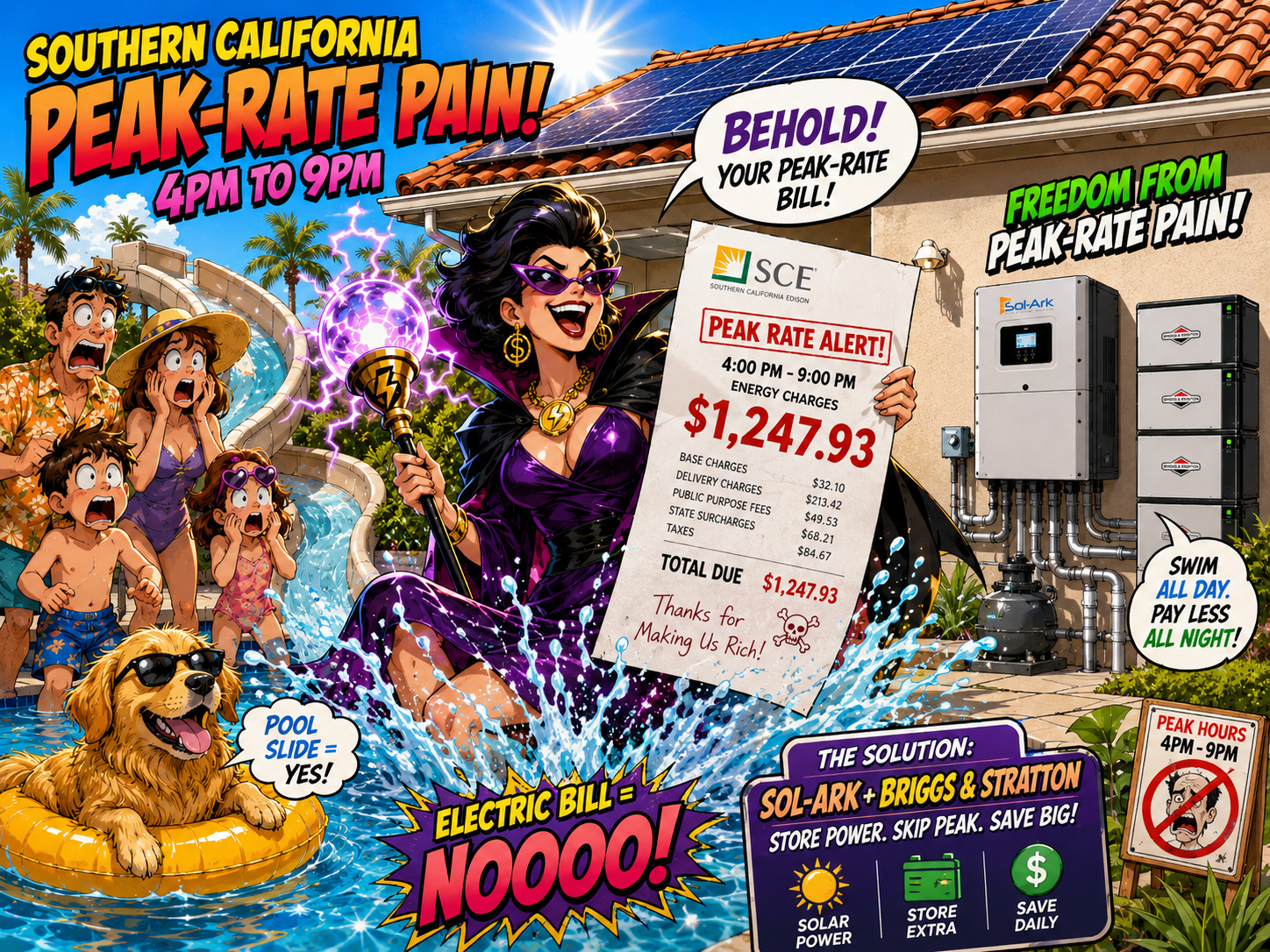
The peak-rate villain that makes the savings story memorable.