Sol-Ark is the power traffic manager.
In the SolarPoolSlide.com story, Sol-Ark is the serious equipment that helps manage the relationship between solar, battery storage, grid power, and selected loads.
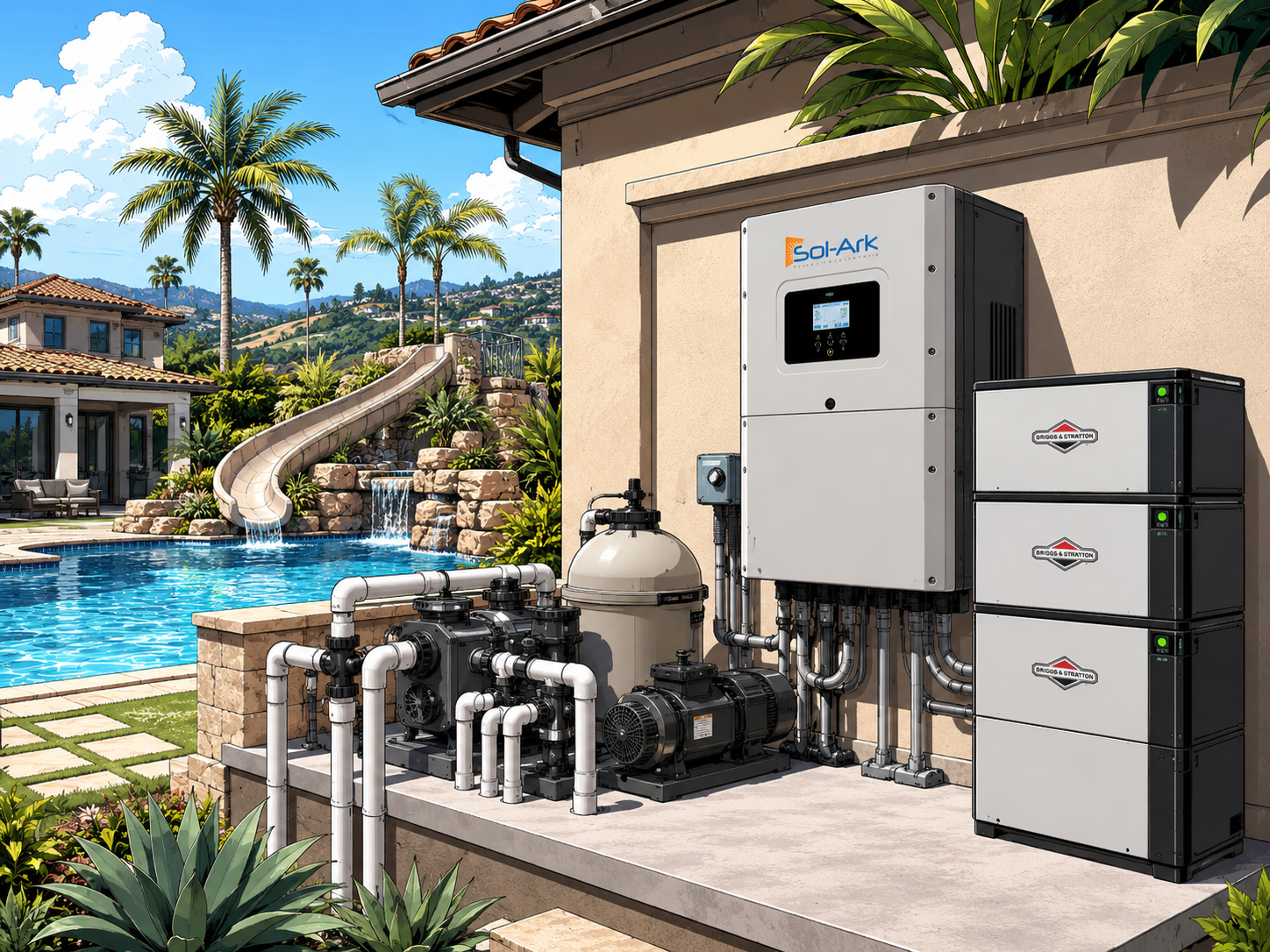
A Sol-Ark pool slide system is not a toy. It is the inverter-centered design conversation behind solar production, battery backup, pool pumps, controls, lights, and selected backyard loads.
The inverter role
Pool owners see the slide. ABC Solar sees circuits, loads, inverter settings, battery capacity, solar production, safety, and the equipment pad where everything must work together.
In the SolarPoolSlide.com story, Sol-Ark is the serious equipment that helps manage the relationship between solar, battery storage, grid power, and selected loads.
Pumps, controls, lights, heaters, spa equipment, and water features should be reviewed as actual loads, not vague backyard wishes.
The Sol-Ark system chain
The goal is to make the system understandable without pretending the design is simple.
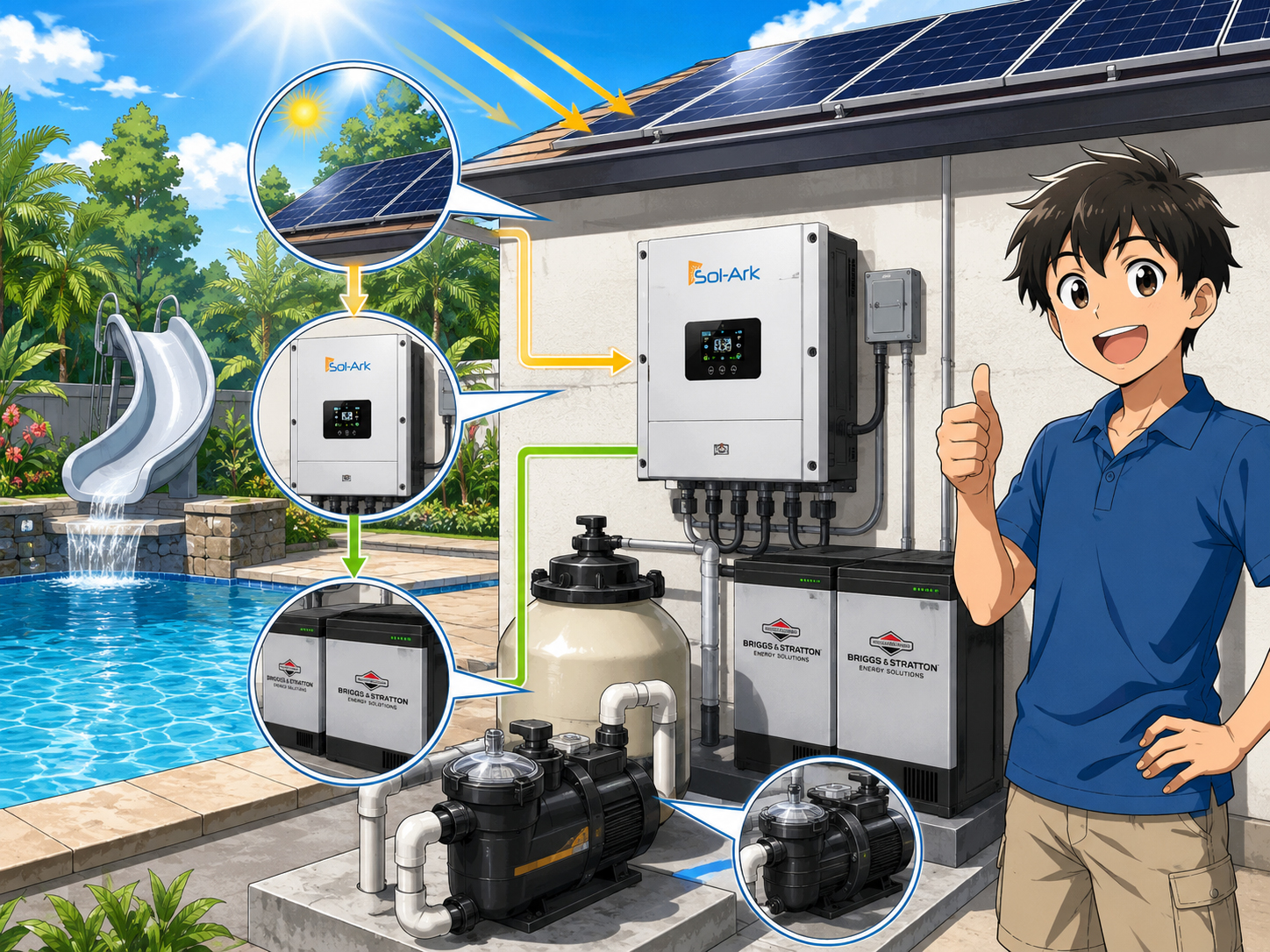
Panels turn sunshine into useful electrical production for the home and pool energy story.
The inverter helps coordinate solar, batteries, grid connection, and selected loads.
Briggs & Stratton battery equipment supports the backup side of the story when sized correctly.
Pumps, controls, lights, and other selected circuits must be identified before backup is promised.
The visible result is water movement, lights, comfort, and pool-slide fun that feels reliable.
The equipment-pad truth
The equipment pad tells the truth: inverter location, battery placement, conduits, service access, pool circuits, load priorities, and backup expectations all have to fit the real home.
Design discipline
The right answer is site-specific. A pool power system should be reviewed through actual equipment, circuit behavior, backup goals, and available solar production.
Pool pumps, controls, lights, water features, heaters, and spa equipment should be listed clearly.
Battery backup should focus on selected loads that matter most during outages.
Roof space, service equipment, conduit runs, equipment pad clearance, and customer goals all matter.
Pool pump priority
The slide may be the family headline, but the pump explains why the inverter and battery design matter. Moving water, filtration, controls, and runtime are the heart of the pool power story.
The system should not promise fantasy backup. It should support a clear, practical list of selected loads.
ABC Solar review table
The equipment brand matters, but the site design matters too. A strong system starts with verified loads, clear priorities, clean installation planning, and realistic backup expectations.
| Review item | Why it matters | Design question |
|---|---|---|
| Pool pump circuit | The pump may be a major pool-related electrical load. | What voltage, amperage, runtime, and control method are involved? |
| Selected backup loads | Batteries should protect priorities, not wish lists. | Which pool and home loads should stay on during an outage? |
| Battery capacity | Runtime depends on actual load and usable storage. | How long should the selected loads run? |
| Equipment location | Install quality depends on access, clearance, and conduit paths. | Where can Sol-Ark and batteries be installed cleanly and safely? |
| Solar production | Rooftop solar supports the broader energy plan. | How much roof area and sun exposure are available? |
The villains Sol-Ark fights in the story

She hates load scheduling, solar awareness, and homeowners who understand the system.
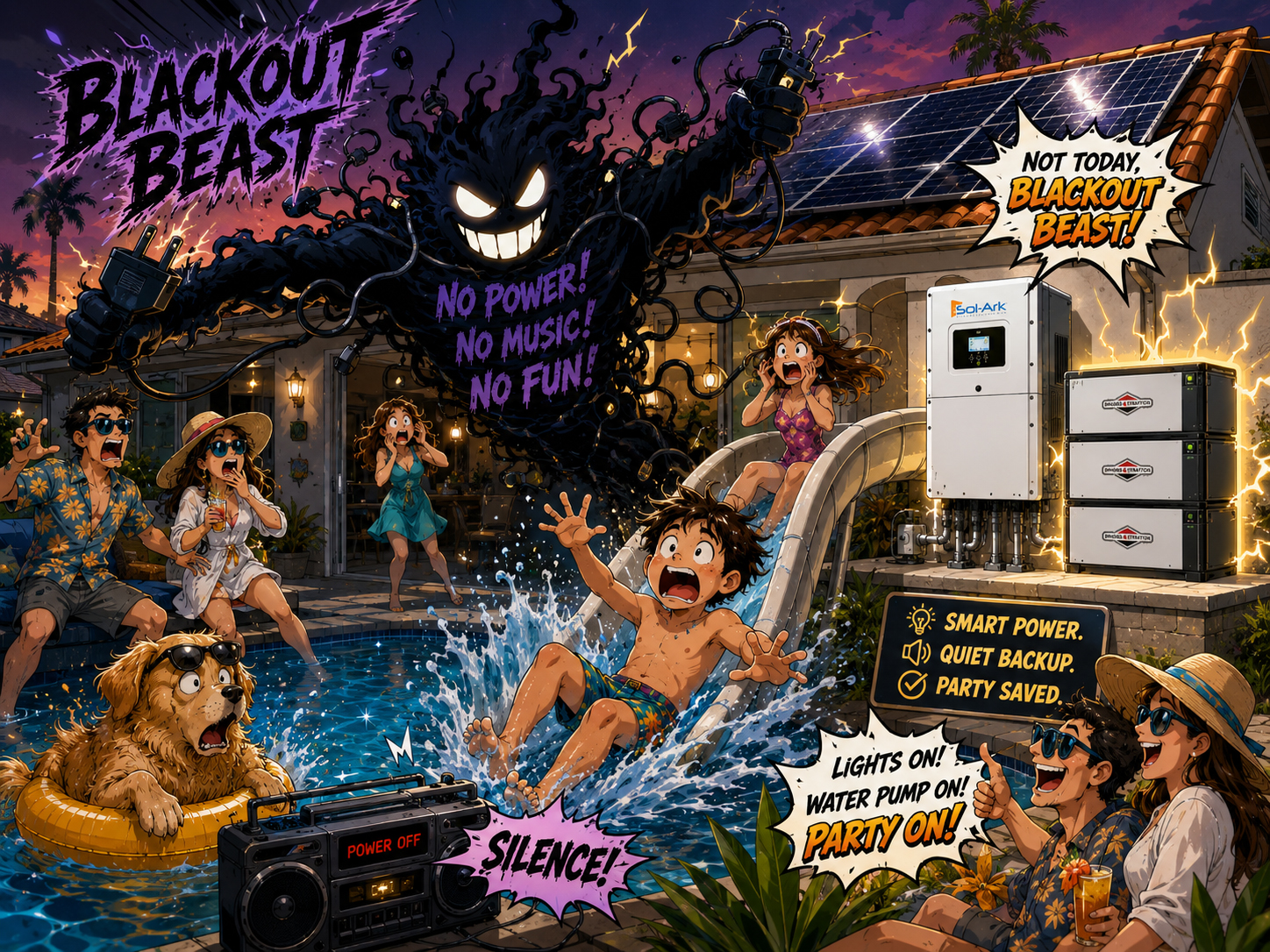
He loses power when selected backup loads are designed correctly.
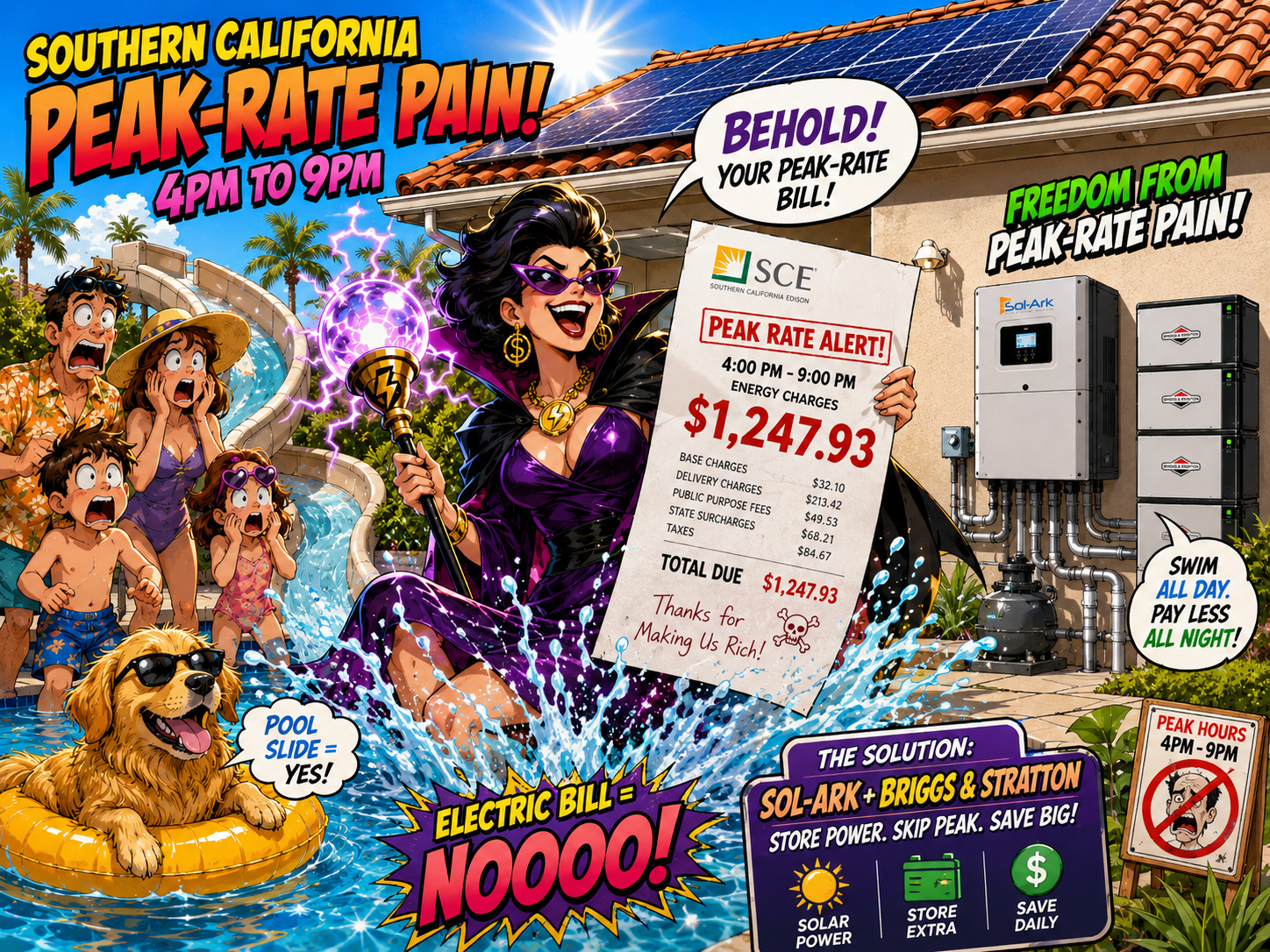
The bill becomes less mysterious when the pool loads are visible.