The pump keeps the pool alive.
The pump moves water through filtration and circulation. Without it, the pool stops feeling like a sparkling backyard resort and starts becoming a maintenance problem.
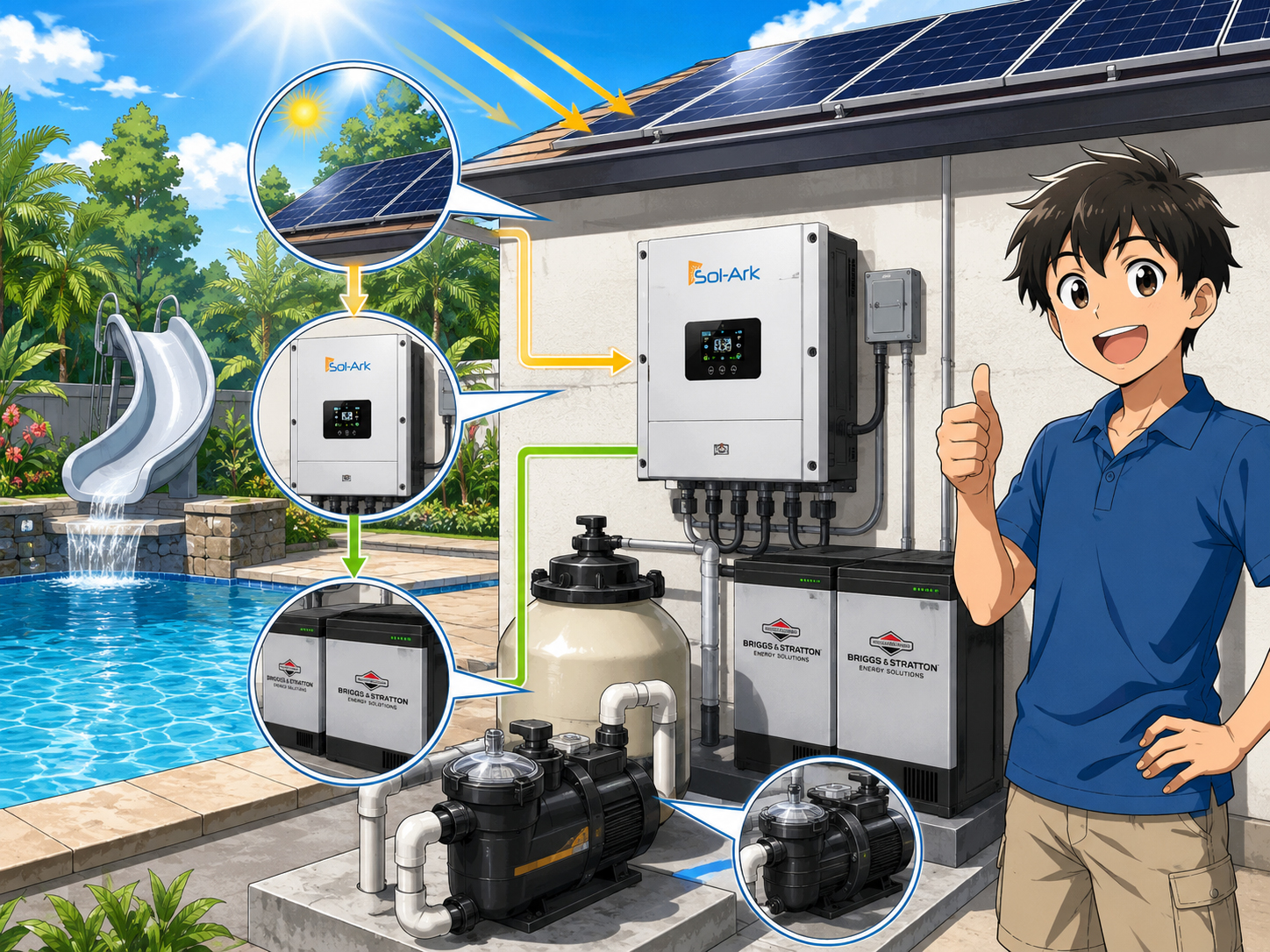
Pool Pump Power explains the real work behind pool fun: circulation, filtration, water movement, runtime, controls, solar production, and selected battery backup.
The pump reality
A beautiful pool does not stay beautiful by accident. Water movement, filtration, controls, and runtime all depend on equipment that uses electricity.
The pump moves water through filtration and circulation. Without it, the pool stops feeling like a sparkling backyard resort and starts becoming a maintenance problem.
A pump’s electrical impact depends on size, voltage, speed, schedule, and how many hours it runs. That makes the pump central to solar and battery planning.
The pump-power chain
The pool pump is not just equipment. It is a daily operating decision.
The motor determines much of the electrical load and operating behavior.
The number of hours matters. A modest load can become important when it runs often.
Timing affects whether pool operation lands in costly afternoon or evening periods.
Solar can help offset home and pool energy use when the system is designed correctly.
The pump may be a selected backup load if the system is designed around real ratings.
The hero nobody cheers for
SolarPoolSlide.com makes the pump visible because it is one of the first pieces of equipment ABC Solar would review before talking about savings, solar, or backup.
What changes pump power
Before deciding what solar or battery backup should do, the pump itself needs to be understood.
Voltage, amperage, horsepower, and pump type affect the load calculation.
Runtime and timing influence energy use, peak-rate exposure, and backup expectations.
Timers, automation, variable-speed settings, and pool logic shape real operation.
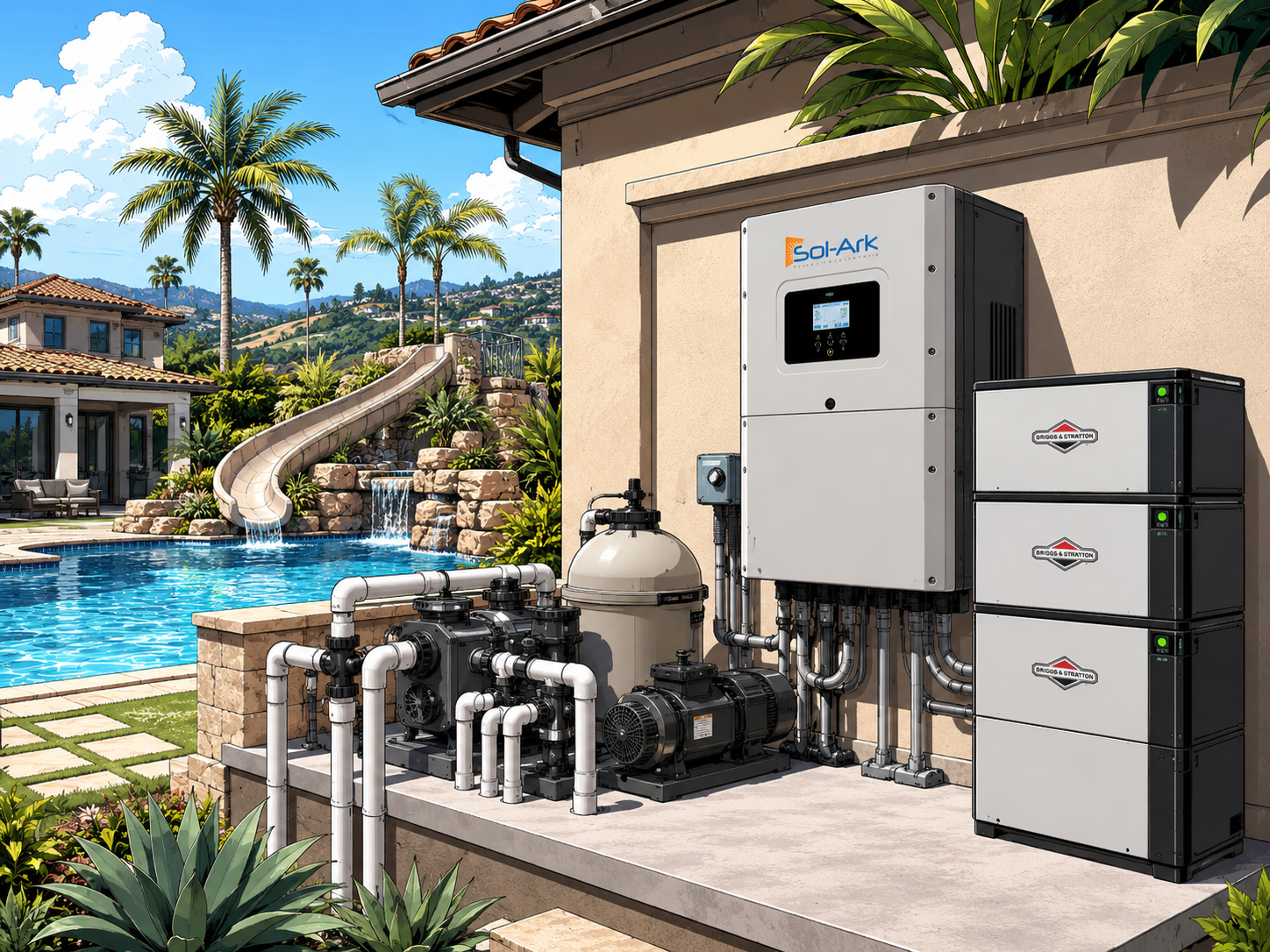
The equipment pad answer
The pump is only one part of the equipment pad. ABC Solar would also review controls, lights, heaters, water features, inverter placement, battery storage, conduit routing, and backup priorities.
Know the pump, know the schedule, know the load. Then solar and backup planning can become specific.
Pump review table
A practical solar or battery answer starts with the actual pump and its real operating behavior.
| Pump question | Why it matters | Design direction |
|---|---|---|
| What kind of pump is installed? | Single-speed and variable-speed pumps behave differently. | Identify model and rating before estimating load. |
| How many hours does it run? | Runtime drives daily energy use. | Review schedule and filtration needs. |
| When does it run? | Timing affects peak-rate exposure. | Compare schedule against solar production and expensive periods. |
| Should it be backed up? | Backup capacity should be reserved for priorities. | Decide whether circulation is a selected backup load. |
| What else is tied to it? | Controls, water features, valves, and automation may depend on pump operation. | Review the full equipment pad, not just the pump. |
Related pages

The family sees the slide. The equipment pad sees the pump.

When power stops, the pump story becomes obvious fast.
The inverter-centered power plan behind selected pool loads.